DogWeave Academy
Dog Genetics 101: How Traits, Coat, and Health Really Work
Understand the science behind every hybrid you create on DogWeave. Learn how coat type, color, size, and health traits actually blend — explained simply and clearly.
Key Takeaways
- Dog traits are shaped by dominant and recessive gene combinations.
- Coat and size outcomes become easier to predict when parent traits are compared directly.
- Hybrid outcomes are most useful when you test, compare, then continue into another generation.
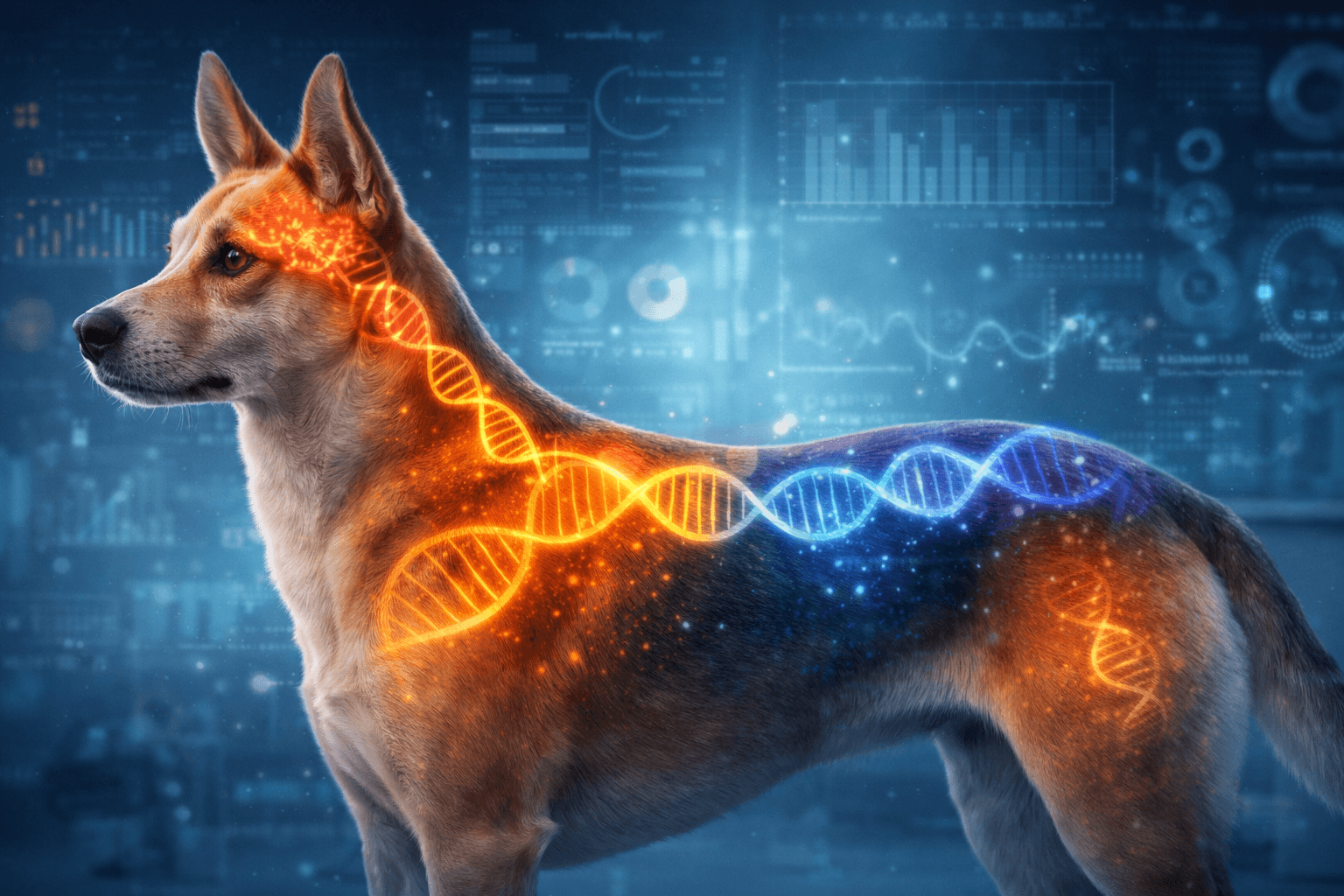
Every time you cross two breeds on DogWeave, real genetics are at work. Our AI doesn’t just guess — it follows the same biological rules that nature uses. Here’s everything you need to know about dog genetics, broken down into easy-to-understand basics. If you want a focused deep dive next, continue with Hybrid Vigor in Dogsand Purebred vs Mixed Breed Dogs.
The Foundation: Chromosomes and Genes
- All dogs have 78 chromosomes (39 pairs).
- Each chromosome carries thousands of genes.
- Genes come in different versions called alleles — one from mom, one from dad.
Dominant alleles
Override the other allele — only one copy needed for the trait to show.
Recessive alleles
Only show up if both parents pass the same version.
This simple rule explains why puppies can look completely different from either parent.
How Coat Type Works
The most famous example is curly vs straight coat:
- Curly coat (Poodle influence) is caused by a mutation in the KRT71 gene.
- Curly is recessive in most breeds.
- Straight is dominant.
Why Labradoodles are usually wavy
Labrador (straight) × Poodle (curly) → First-generation Labradoodles inherit one curly gene + one straight gene, producing a wavy coat. Only when a dog gets two curly genes does it get the classic tight Poodle curl.
How Size Is Determined
Size is controlled by just a few major genes. The biggest one is IGF1 (Insulin-like Growth Factor 1).
- Small dogs usually carry the “small” version of IGF1.
- Large dogs carry the “big” version.
When you cross a small breed with a large breed on DogWeave, the AI predicts the likely size range based on which alleles each parent contributes — just like real genetics.
Coat Color Made Simple
Three main genes control most coat colors:
| Gene | What It Controls | Example |
|---|---|---|
| B locus | Black vs Brown (chocolate) | Labrador black vs chocolate |
| E locus | Allows color to show (or makes yellow/red) | Yellow Labs, Golden Retrievers |
| K locus | Solid color vs brindle/spotting | Solid black German Shepherd vs brindle Boxers |
These three genes alone create hundreds of possible color combinations — which is why your AI hybrids can produce such beautiful, realistic coat variations.
Health Genetics: The Hidden Side
Many health issues are caused by recessive genes. That’s why purebred dogs sometimes have higher risks — both parents may carry the same hidden bad gene.
Hybrid dogs often avoid these problems through hybrid vigor— they’re less likely to inherit two copies of the same problematic gene.
DogWeave’s AI always factors in known health risks from both parents when suggesting possible issues for your new hybrid.
Quick Genetics Quiz
How well do you understand now?
Can two black Labs produce a yellow puppy?
✅ Yes— both parents can carry the recessive “yellow” gene.
Will a Labradoodle always have curly fur?
❌ No — it depends on which genes are actually inherited.
Are small × large crosses unpredictable?
⚖️ Somewhat— but the IGF1 gene makes size more predictable than you’d think.
Ready to put your new genetics knowledge to work?
Create your first scientifically accurate hybrid — see realistic coat, size, and health predictions powered by real canine genetics.
Create Your First Hybrid on DogWeaveNeed parent ideas first? Browse Breeds before you weave.
What’s Next in DogWeave Academy?
Purebred vs Mixed Breed Dogs: Health, Lifespan & Temperament Truth
The Science of Hybrid Vigor: Why Crossbred Dogs Are Often Healthier

How AI Is Revolutionising Dog Breeding in 2026
Next Steps
Put this into practice in the Breeding Studio, shortlist parents on Browse Breeds, and expand your model withHow AI Is Changing Dog Breeding.
Last reviewed: March 2026 by DogWeave Editorial Team (AI Sure Tech).