DogWeave Academy
Designer Dogs Guide: The History of Labradoodles, Goldendoodles & More
From the first intentional cross in the 1980s to the explosion of “doodles” and “poos” today — discover how designer dogs changed the world of pet ownership forever.
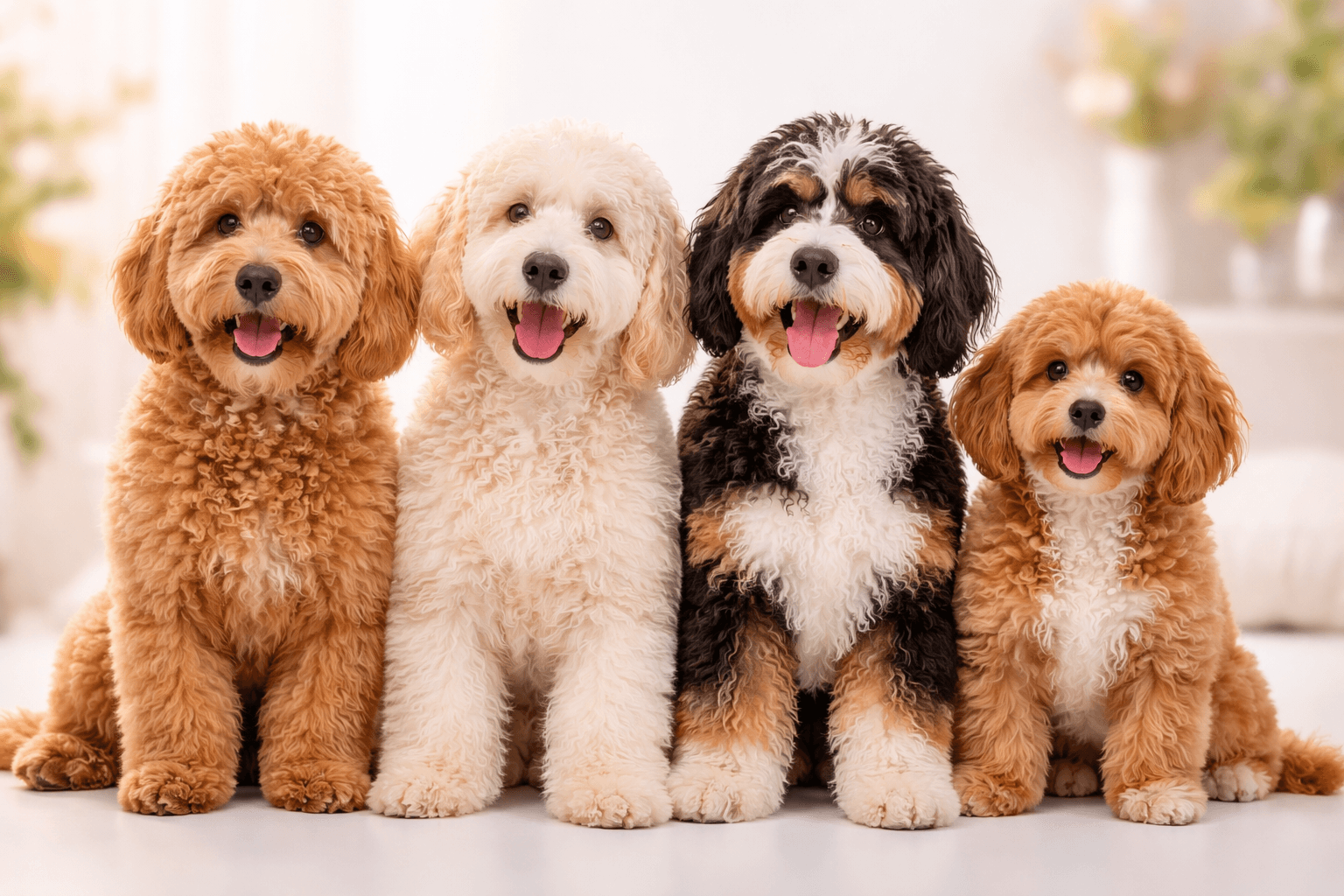
The term “designer dog” was almost unheard of before the 1990s. Today, names like Labradoodle, Goldendoodle, Cavapoo, and Maltipoo are household favorites. These intentional crosses aren’t just trendy — they represent one of the biggest shifts in dog breeding in the last century.
Here’s the complete story of how designer dogs began, why they became so popular, and what it means for the future of breeding.
The Timeline of Designer Dogs
| Year | Breed | Original Purpose | Impact |
|---|---|---|---|
| 1988 | Labradoodle | Allergy-friendly guide dog | Started the entire designer dog movement |
| 1990s | Goldendoodle | Family dog with low shedding | Became one of the most popular hybrids ever |
| Early 2000s | Cavapoo | Small, affectionate companion | Exploded in popularity for apartments |
| 2000s | Maltipoo | Tiny lap dog with minimal shedding | Made “teacup” hybrids mainstream |
| 2010s | Bernedoodle, Sheepadoodle, Pomsky | Fashionable family dogs | Social media boom |
| 2020s | Multi-gen & AI-generated crosses | Healthier, more predictable traits | Next evolution of designer dogs |
Why Designer Dogs Exploded in Popularity
- Low-Shedding & Allergy-Friendly
The very first Labradoodle was created for a woman who needed a guide dog her husband could live with. Poodles’ curly coat doesn’t shed much, so crossing them with other breeds created dogs that were easier on allergies.
- Hybrid Vigor
Many first-generation crosses are healthier and live longer than their purebred parents.
- Customizable Companions
People could finally “design” the perfect dog — size, coat, energy level, and temperament.
- Social Media Effect
Instagram and TikTok turned doodles into celebrities overnight.
The Good, The Bad, and The Truth About Designer Dogs
The Good
- Often healthier due to genetic diversity
- More predictable size and coat than purebreds
- Huge variety to match every lifestyle
The Bad
- Many backyard breeders created unhealthy dogs
- “Multi-gen” doodles sometimes lost the low-shedding trait
- Higher risk of unethical breeding practices
The Reality
When done responsibly with health-tested parents, designer dogs can be fantastic companions. That’s exactly why tools like DogWeave exist — to let you explore realistic crosses with accurate genetics and health predictions.
The Future of Designer Dogs Is Here
We’re now entering the AI era of designer dogs. Instead of guessing what a Labradoodle × Husky might look like, you can see it instantly, with real trait blending and health insights.
The same spirit that created the first Labradoodle in 1988 is alive today — only now it’s smarter, faster, and more responsible.
Ready to create the next great designer dog?
Mix any two breeds and instantly see the result — with realistic traits, coat predictions, and health insights powered by DogWeave.
Start Designing on DogWeaveWhat’s Next in DogWeave Academy?
Need parent ideas first? Browse Breeds before you weave.
Dog Genetics 101: How Traits, Coat, and Health Really Work
Purebred vs Mixed Breed Dogs: Health, Lifespan & Temperament Truth
The Science of Hybrid Vigor: Why Crossbred Dogs Are Often Healthier
Last updated: March 2026 · DogWeave Academy — Understanding dogs, one cross at a time.