DogWeave Academy
Why Dogs Interbreed So Easily: The Genetics Behind Incredible Hybrids
Discover why dogs can create healthy, diverse hybrids while almost every other animal cannot — and how this unique superpower makes every cross on DogWeave possible.
Dogs are the ultimate hybrid-making machine. A Labrador and a Poodle create a Labradoodle. A Husky and a Pomeranian create a Pomsky. A French Bulldog and a Boston Terrier create a Frenchton. These crosses aren’t just possible — they’re often healthier and more vibrant than either parent.
But why? Why can dogs mix so successfully when lions and tigers produce sterile ligers, horses and donkeys produce sterile mules, and most other species can’t produce viable offspring at all?
The Genetic Superpower: Dogs Share the Same “Recipe Book”
All domestic dogs belong to the same species: Canis lupus familiaris.
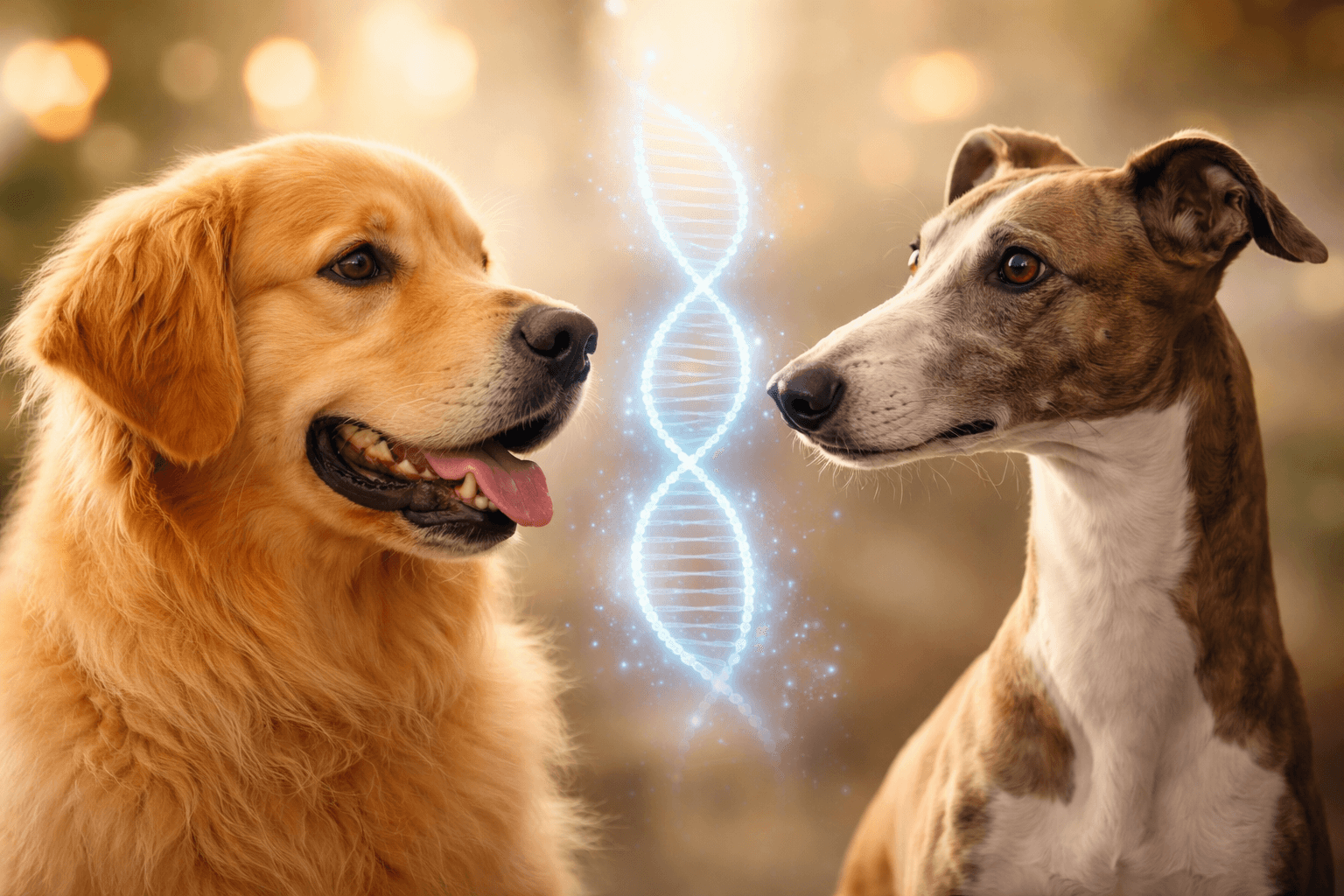
Even though they look wildly different, every single breed — from a 2-pound Chihuahua to a 180-pound Great Dane — has exactly the same number of chromosomes (78) and nearly identical DNA.
This means:
- Sperm and egg from any two dogs can successfully combine
- The resulting puppy almost always has the correct number of chromosomes
- Most genetic instructions are compatible
Compare this to almost every other animal on Earth. A horse has 64 chromosomes and a donkey has 62 — the mismatch creates a mule that is almost always sterile. Lions and tigers can produce ligers, but they’re usually infertile and often unhealthy.
Dogs skipped this problem entirely.
Hybrid Vigor (Heterosis): Why Mixed Dogs Are Often Healthier
When two genetically different dogs breed, their puppies often display hybrid vigor — a real biological effect where the offspring are stronger, healthier, and longer-lived than either purebred parent.
Here’s what actually happens:
- Diverse immune systems — puppies inherit different disease-resistance genes from each parent
- Reduced chance of recessive disorders — many pure breeds carry hidden genetic defects; mixing dilutes them
- Better overall vitality — studies show mixed-breed dogs live 1–3 years longer on average than purebreds
This is exactly why so many designer breeds (Labradoodles, Goldendoodles, Cavapoos) became popular in the first place.
How Coat, Color, and Size Genes Mix So Beautifully
Dogs have an unusually high number of genes that control visible traits:
- Over 300 genes affect coat type and color alone
- Size is controlled by just a few major genes (especially IGF1)
- Ear shape, muzzle length, and tail curl are all highly variable
This genetic flexibility is why one generation of crossing can produce dramatic — yet healthy — changes in appearance. Your AI crosses on DogWeave use the same real genetic rules that nature follows.
Why Other Animals Can’t Do This
| Animal Pair | Can Produce Offspring? | Are Offspring Fertile? | Reason |
|---|---|---|---|
| Dog × Dog | Yes | Yes | Same species, same chromosome count |
| Horse × Donkey | Yes (mule) | Almost never | Different chromosome count |
| Lion × Tiger | Yes (liger/tigon) | Usually sterile | Different species |
| Wolf × Coyote | Yes | Sometimes | Very close relatives |
| Cat × Dog | Never | — | Different families |
Dogs are one of the very few mammals where every breed is still the same species and fully compatible.
The Takeaway for Modern Dog Lovers
The incredible hybrid potential of dogs isn’t an accident — it’s the direct result of 30,000 years of domestication and selective breeding by humans.
This same genetic flexibility is what makes DogWeavepossible. Every time you create a new hybrid on our AI tool, you’re tapping into the same real biological rules that created the Labradoodle, the Pomsky, and thousands of other beloved crosses.
Ready to see what happens when you cross your favourite breeds?
Mix any two breeds in the DogWeave Breeding Studio and see the science in action — custom AI image, personality traits, and full ancestry tree.
Create Your First Hybrid on DogWeaveNeed parent ideas first? Browse Breeds before you weave.
What’s Next in DogWeave Academy?
From Wolves to Dogs: The 30,000-Year Story of Domestication
Why Dogs Are Man's Best Friend (The Real Science)
Dogs vs Cats: 12 Surprising Differences Every Pet Lover Should Know
Last updated: March 2026 · DogWeave Academy — Understanding dogs, one cross at a time.