DogWeave Academy
From Wolves to Dogs: The 30,000-Year Story of Domestication
How a fierce predator became humanity’s best friend — and why this ancient transformation still makes every hybrid on DogWeave possible today.
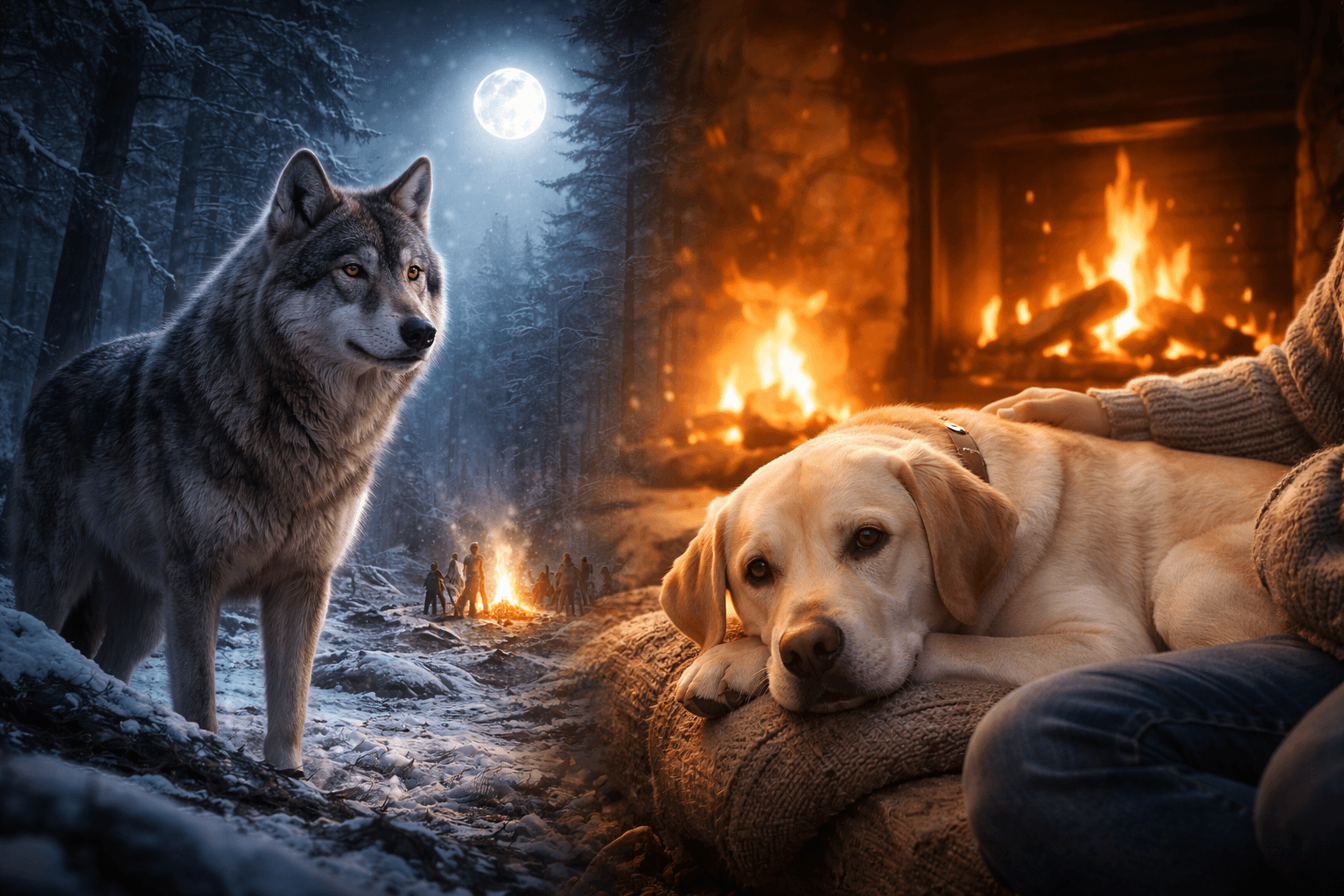
Thirty thousand years ago, somewhere in Eurasia, a few bold wolves made a life-changing decision: they started hanging around human camps instead of running away. That single choice set off one of the most remarkable evolutionary journeys in history.
Today, every dog on Earth — from a tiny Chihuahua to a massive Mastiff — carries the DNA of those ancient wolves. Understanding this story helps explain why dogs can interbreed so successfully and why our AI breeding tool can create realistic, healthy hybrids in seconds.
The Ancient Beginning: When Wolves Chose Us
Modern dogs didn’t descend from the gray wolves we see today. Genetic studies show they split from an extinct wolf population that lived alongside early humans.
The partnership began during the last Ice Age. Humans were nomadic hunters. Wolves followed them, scavenging leftovers. Over generations, the friendliest wolves were tolerated — even fed — and the more aggressive ones were driven off or killed. This created the first unconscious selection pressure.
The 30,000-Year Timeline of Dog Domestication
| Time Period | Key Event | What Changed |
|---|---|---|
| ~30,000–20,000 years ago | First wolves begin following human camps | Friendliness genes start spreading |
| ~15,000–14,000 years ago | Earliest confirmed dog remains (Bonn-Oberkassel, Germany) | Dogs buried with humans — clear emotional bond |
| ~11,000 years ago | Major genetic shift in starch digestion (AMY2B gene) | Dogs could eat human scraps and cooked food |
| ~8,000–6,000 years ago | Early breed types emerge (hunting, herding, guarding) | Size, coat, and behavior begin to diversify |
| ~4,000 years ago | Distinct breeds appear in ancient civilizations | Egyptians, Romans, and Chinese develop specialized dogs |
| 1800s–present | Explosion of modern breeds and designer hybrids | Victorian “breed fancy” + today’s AI-powered crosses |
The Genetic Magic That Made It Possible
Three major changes turned wolves into dogs:
- Reduced Fear and Aggression — Mutations in genes like WBSCR17 made dogs less fearful of humans.
- Starch Digestion — Dogs developed extra copies of the AMY2B gene, allowing them to thrive on human food scraps.
- Smaller Brains & Jaw — Less need for hunting meant smaller skulls and brains — but higher social intelligence.
These changes happened remarkably fast in evolutionary terms because humans were actively (even if unintentionally) shaping the population.
Two Competing Theories — Both Are Probably True
- Human Selection Theory: Early humans deliberately kept the friendliest wolves.
- Self-Domestication Theory: Friendlier wolves naturally survived better around humans and bred more.
Most scientists now believe it was a combination — wolves self-selected for tameness, and humans later reinforced it with breeding.
Why This Ancient Story Still Matters on DogWeave
The incredible genetic flexibility that allowed wolves to become dogs is the same reason any two breeds can successfully cross today.
That 30,000-year head start in compatibility is exactly what powers every hybrid you create here — from realistic trait blending to believable health predictions.
Without that ancient partnership between humans and wolves, modern designer dogs (and our AI tool) simply wouldn’t exist.
Ready to continue the 30,000-year story?
Create your own modern hybrid in the DogWeave Breeding Studio — AI image, trait predictions, and full ancestry tree included.
Create Your Own Modern Hybrid Right NowWhat’s Next in DogWeave Academy?
Need parent ideas first? Browse Breeds before you weave.
Why Dogs Are Man's Best Friend (The Real Science)
Dogs vs Cats: 12 Surprising Differences Every Pet Lover Should Know
Hybrid Animals in Nature: Which Species Can Actually Interbreed?
Last updated: March 2026 · DogWeave Academy — Understanding dogs, one cross at a time.