DogWeave Academy
Hybrid Animals in Nature: Which Species Can Actually Interbreed?
From ligers and mules to wholphins and grolar bears — discover the rare animals that can hybridize and why dogs are the undisputed champions of mixing breeds.
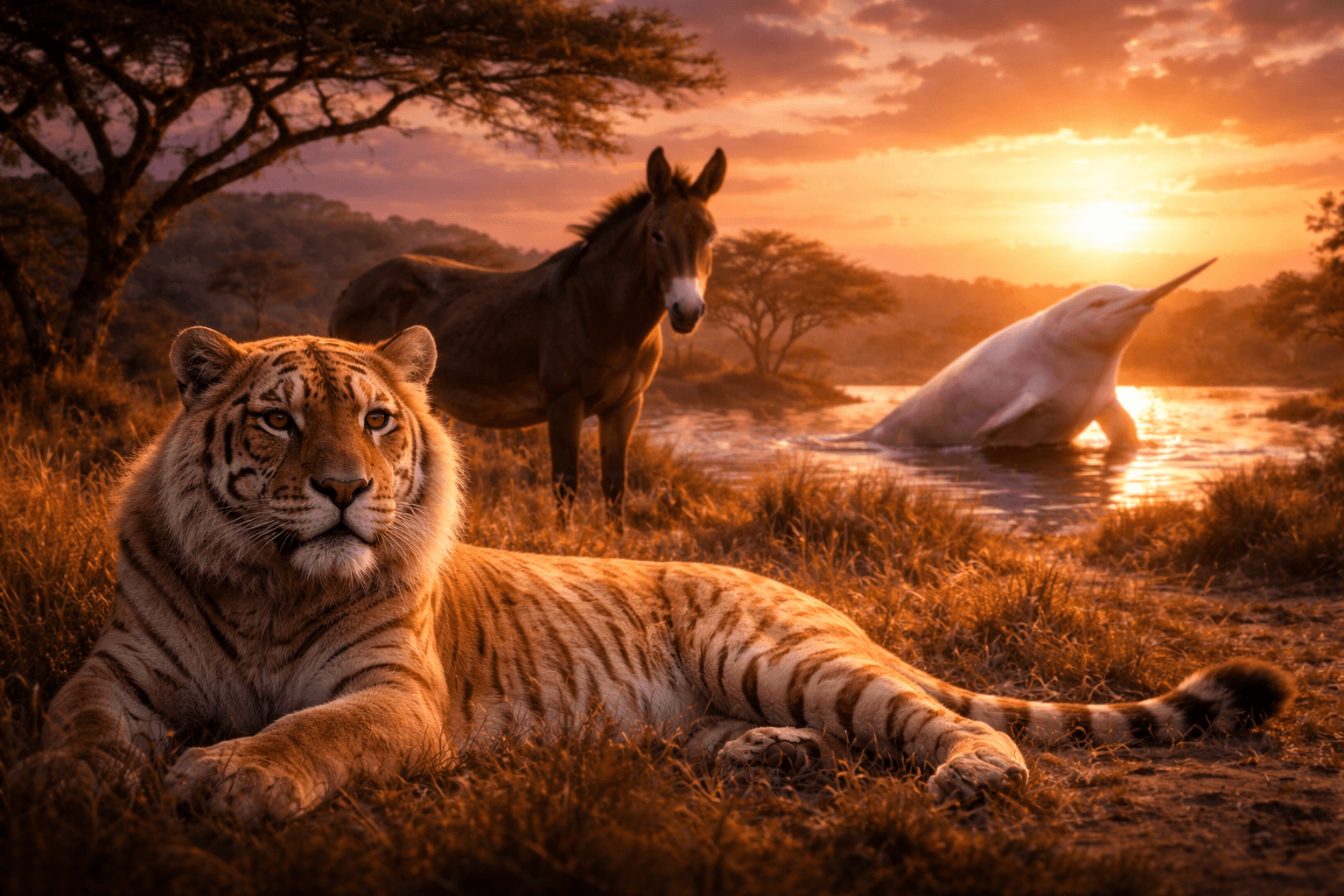
In nature, successful hybridization between different species is extremely rare. Most animals that look similar cannot produce healthy, fertile offspring — and when they do, the babies are often sterile or have serious health issues.
Dogs are the big exception. Understanding real-world hybrids helps explain why your crosses on DogWeave work so well and feel so realistic.
Famous Hybrid Animals in Nature
| Hybrid Name | Parent Species | Fertile? | Health & Lifespan | Rarity |
|---|---|---|---|---|
| Liger | Male Lion + Female Tiger | Almost never | Often very large, health issues | Very rare (captivity only) |
| Mule | Male Donkey + Female Horse | Almost never | Strong and long-lived but sterile | Common in working animals |
| Wholphin | False Killer Whale + Bottlenose Dolphin | Rare | Generally healthy | Extremely rare |
| Zorse | Zebra + Horse | Very rare | Usually healthy but sterile | Rare |
| Beefalo | American Bison + Domestic Cow | Partially fertile | Hardy and strong | Deliberately bred |
| Coywolf | Coyote + Gray Wolf | Yes | Very successful in the wild | Increasing naturally |
| Savannah Cat | Serval + Domestic Cat | Males often sterile | Generally healthy | Popular as pets |
| Dog × Dog | Any two dog breeds | Yes | Often healthier (hybrid vigor) | Extremely common |
Why Most Hybrids Fail (But Dogs Succeed)
When two different species try to breed, nature usually throws up roadblocks:
- Chromosome mismatch — Different numbers of chromosomes make healthy development difficult.
- Genetic incompatibility— Genes from each parent don’t work well together, causing developmental problems.
- Sterility— Even when babies survive, they often can’t have offspring of their own, ending the genetic line.
Dogs break all these rules because every breed is still the same species (Canis lupus familiaris). They all have 78 chromosomes and highly compatible DNA. This is why you can cross a Chihuahua with a Great Dane and still get healthy puppies.
This same genetic flexibility is exactly what powers every hybrid you create on DogWeave.
The Takeaway
While hybrid animals like ligers and zorses are fascinating, they are rare exceptions — and usually come with major drawbacks. Dogs, on the other hand, are nature’s master hybridizers.
That 30,000-year evolutionary head start in compatibility is what makes DogWeave possible — and why every cross you create here feels real, believable, and full of potential.
Ready to create your own unique hybrid?
Build something nature never could — your own AI-generated hybrid dog complete with a custom image, traits, and full ancestry tree.
Start Breeding on DogWeaveWhat’s Next in DogWeave Academy?
Need parent ideas first? Browse Breeds before you weave.

Human Evolution: Why Only Homo Sapiens Survived
Designer Dogs Guide: The History of Labradoodles, Goldendoodles & More
Dog Genetics 101: How Traits, Coat, and Health Really Work
Last updated: March 2026 · DogWeave Academy — Understanding dogs, one cross at a time.